
FAQ -Frequently Asked Questions
Learn more about our approach, potential applications and technical solutions – from planning and simulation to virtual commissioning, robot programming, 3D scanning and industrial metrology.
General Questions
1What automation services does RAITEC offer?
RAITEC supports companies in the planning, development and implementation of customized automation solutions. Our range of services includes engineering and simulation, virtual commissioning, robot programming, PLC and control engineering, planning and consulting, as well as 3D metrology and 3D scanning. We support projects from the initial concept through commissioning and optimization.
2Which industries does RAITEC serve?
RAITEC works across various industries, supporting companies with demanding automation and engineering requirements. Our areas of application include automotive, mechanical and plant engineering, aerospace and other industrial sectors. Our experience in different production environments enables us to tailor solutions to specific technical and economic requirements.
3Can RAITEC take on individual project phases?
Yes. Our services can be flexibly adapted to individual project requirements. For example, do you need support with robot programming, PLC programming, simulation, virtual commissioning or 3D metrology? RAITEC can take on specific project phases or clearly defined tasks and complement existing project teams.
4How does a project with RAITEC work?
At the beginning, we work together with you to analyze your requirements, technical framework conditions and project objectives. We then define the necessary services and develop a suitable approach. Depending on the project, we subsequently support you with engineering, simulation, programming, virtual or physical commissioning, as well as optimization and modifications.
5What information does RAITEC need for an initial project assessment?
For an initial assessment, information about your system or project, the services required and the current project status is particularly helpful. Depending on the task, relevant information may include existing CAD data, plant layouts, technical documentation, PLC or robot programs, as well as details about robots, control systems and production processes. The more detailed the initial information, the more accurately we can assess the scope of work and the appropriate approach.
6Can RAITEC also optimize existing systems and automation solutions?
Yes. RAITEC also supports the analysis and optimization of existing systems and automation solutions. This may include examining and optimizing robot sequences, cycle times, control programs and production processes. The objective is to make existing systems more efficient, reliable and productive.
Engineering / Simulation
1What does engineering at RAITEC involve?
RAITEC supports the planning and design of automated production and manufacturing processes. This includes layout planning, robot and system design, reach and accessibility studies, as well as the optimization of manufacturing processes.
2What are the benefits of production system simulation?
Virtual simulation makes it possible to analyze production systems and processes before they are physically implemented. Motion sequences, accessibility, collisions and cycle times can be checked and optimized at an early stage. This allows potential problems to be identified during the planning phase.
3Can RAITEC simulate complete production systems virtually?
Yes. RAITEC can create virtual representations of complex production and manufacturing processes and analyze them. This includes robots, system components and production sequences. Different scenarios can therefore be tested before actual commissioning takes place.
4Can simulation be used to optimize system cycle times?
Yes. Simulation allows motion sequences and process times to be analyzed in detail. This helps identify optimization potential and compare different alternatives before changes are made to the actual system.
5Does RAITEC support offline robot programming?
Yes. RAITEC supports the offline programming of robotic systems. Programs can be prepared and optimized using a virtual representation of the production system. This reduces the time required for subsequent commissioning and makes programming work more efficient.
Virtual Commissioning
1What is virtual commissioning and what are its benefits?
Virtual commissioning involves digitally simulating a machine or production system before it is physically built. Control and automation software can then be tested and optimized under realistic conditions. This helps identify errors at an early stage, shorten commissioning times and reduce costs.
2When is virtual commissioning worthwhile?
Virtual commissioning is particularly beneficial for complex machines and systems, demanding automation tasks and projects with tight deadlines. The earlier control and automation functions are tested virtually, the more errors can be identified and corrected before actual commissioning.
3Which components and systems can be simulated during virtual commissioning?
Depending on the project, machine sequences, sensors and actuators, PLC controls, robots, drives and safety-related functions can be virtually represented and tested. This creates a digital model that allows the interaction between different components to be checked under realistic conditions.
4What types of errors can be detected through virtual commissioning?
Virtual commissioning can identify errors in program sequences, interfaces, signal processing, motion sequences and communication between individual components. Problems can therefore be resolved before they cause delays or additional costs during actual commissioning.
5How does virtual commissioning work?
The process begins by creating a virtual representation of the machine or production system and connecting it to the intended control and automation technology. The sequences and functions are then simulated, tested and optimized. The findings can subsequently be transferred to actual commissioning, ensuring a faster and more reliable system start-up.
Robot Programming
1What does professional industrial robot programming involve?
Professional robot programming involves creating, adapting and optimizing robot programs for automated production systems. In addition to the robot's motion sequences, we also take into account communication with PLCs, sensors, peripheral equipment and other system components. The objective is to achieve reliable, efficient robot operations that are optimally adapted to the respective production process.
2Which industrial robots can be programmed?
We program industrial robots from various manufacturers and platforms. These include robots from KUKA, ABB, FANUC, Stäubli, Motoman and YASKAWA. Depending on the project, we handle the programming, modification and optimization of existing robotic systems or support the implementation of new automation solutions.
3What is offline programming (OLP) for industrial robots?
Offline programming (OLP) means that robot programs are created and tested in a virtual computer environment rather than directly on the production system. Motion sequences, reachability, collisions and, in some cases, cycle times can be checked before commissioning. This allows programming work to be completed in advance, reduces production downtime and makes commissioning more efficient.
4How can robot programs and cycle times be optimized?
By specifically optimizing robot movements, unnecessary travel distances, waiting times and inefficient motion sequences can be reduced. Simulation and offline programming make it possible to analyze and optimize motion paths before implementing changes to the actual system. This can shorten cycle times and improve the productivity of robotic systems.
5Can an existing robotic system be optimized or reprogrammed at a later stage?
Yes. Existing robotic systems can be adapted and optimized, for example, when products change, systems are modified or new production requirements arise. We support the reprogramming of robot sequences, cycle time optimization, system relocations and modifications to existing programs. This allows the performance of existing robotic technology to be improved in a targeted manner.
Control Engineering
1What is control engineering and what functions does it perform?
Control engineering forms the foundation of automated machines and production systems. It ensures that individual components such as sensors, actuators, drives and machine sequences communicate reliably and are controlled automatically. Individually developed control systems make production processes more efficient, precise and reliable.
2Which PLC systems and controllers can be programmed?
We program PLC systems from various manufacturers and platforms. These include Siemens TIA Portal, SIMATIC S7 and S5, as well as Rockwell Allen-Bradley. Depending on the requirements, we develop new PLC programs and modify or optimize existing control systems.
3Which programming languages are used in control engineering?
Various programming languages are used in industrial control engineering. The most common include: Ladder Diagram (LD), Function Block Diagram (FBD), Structured Text (ST).
The programming language used depends on the control platform, the application and the specific project requirements.
4Can existing control systems be modernized and optimized?
Yes. Existing PLC controls and automation systems can be analyzed, modernized and adapted to meet new requirements. This may include optimizing PLC programs, migrating older control systems, adapting systems to new machine components and improving process sequences. This allows existing systems to continue operating efficiently while remaining future-proof.
5What does modern automation technology involve besides PLC programming?
A comprehensive automation solution includes more than just PLC programming. Other areas include visualization, HMI, drive technology and industrial communication.
By optimally coordinating these components, a powerful control solution can be created for the entire machine or production system. We support our customers throughout the entire process, from planning and programming to commissioning and optimization.
3D-Metrology
1What is mobile 3D metrology?
Mobile 3D metrology enables the precise three-dimensional measurement of components, fixtures, machines and complete production systems directly on site.
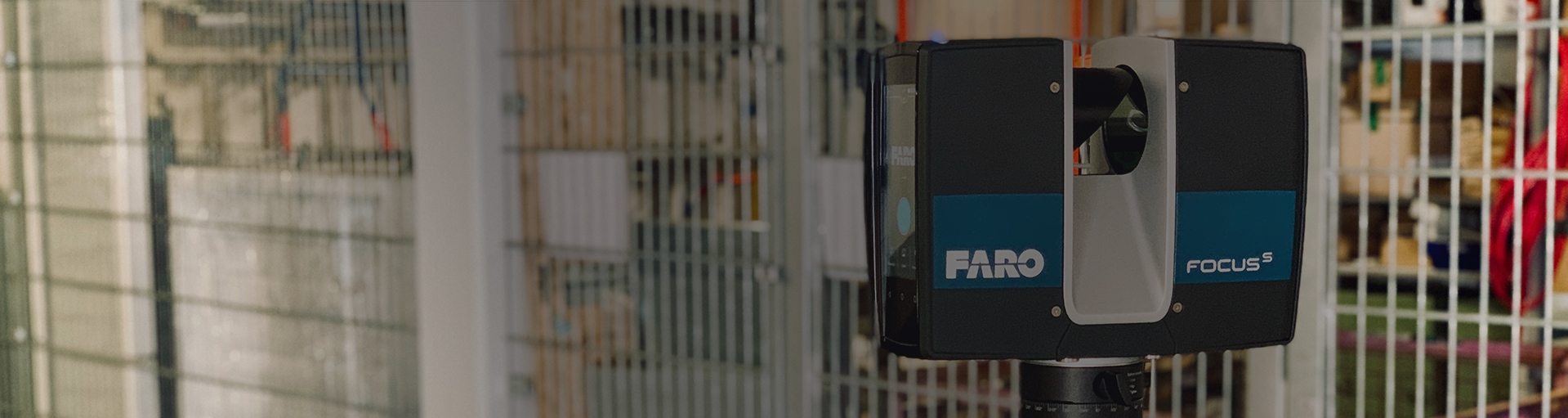
Depending on the measurement task, we use portable measuring arms, laser trackers or 3D laser scanners. This also allows large or already installed objects to be measured without having to dismantle or transport them.
2Which components, machines and systems can you measure?
We measure individual components and fixtures as well as large machines, production systems and complex assemblies.
Typical applications include machine geometry measurements, system measurements, fixture inspections, assembly support, nominal-to-actual comparisons and 3D as-built documentation.
3When is laser tracker measurement appropriate?
Laser tracker measurement is particularly suitable for large components, machines and production systems where high measurement accuracy is required over greater distances.
Typical applications include machine installation and alignment, system assembly, geometric acceptance inspections, reference point measurements and the verification of machine geometry.
4Can you carry out 3D measurements directly at our premises?
Yes. Our metrology equipment is mobile and can be used directly at your production facility, assembly hall or at your end customer's premises.
This enables us to measure even large machines and production systems on site throughout Germany. We adapt the measurement process to the specific spatial and technical conditions.
5Can you also capture existing machines and systems for retrofitting or modifications?
Yes. Using 3D laser scanning and mobile metrology, we can digitally capture existing machines, production systems and manufacturing areas.
The resulting 3D data can serve as a basis for retrofitting, modifications, extensions, as-built documentation, system planning and reverse engineering.
3D-Scanning
1What is 3D scanning and how does it work?
3D scanning is a non-contact method for accurately capturing objects, components, systems and spaces digitally.
Modern 3D scanners capture geometries and surfaces and convert them into detailed digital representations in the form of 3D point clouds or polygon meshes.
The resulting data can subsequently be used for measurements, quality inspections, reverse engineering, design and 3D printing.
2How accurate is 3D scanning?
The achievable accuracy depends on the 3D scanner used, the distance to the object being measured, its geometry and the specific project requirements.
RAITEC uses various professional measurement systems for large-scale scanning and high-precision quality inspections. This allows us to select the appropriate solution depending on whether the application requires extensive 3D data capture or highly accurate component inspection.
3What can 3D scanning be used for?
3D scanning is suitable for a wide range of applications in mechanical engineering, plant engineering, skilled trades, architecture, construction, research and development.
Typical applications include: Creating point clouds and polygon meshes, High-precision spatial and production system measurements, Nominal-to-actual comparisons, Quality assurance, Wear inspections, Creating digital data for 3D printing, Digitizing existing components for reverse Engineering.
4What is reverse engineering using 3D scanning?
In reverse engineering, existing components or objects are first digitally captured using 3D scanning.
The resulting 3D data can then be used to generate digital models and technical drawings. This makes it possible, for example, to reproduce discontinued or unavailable components, optimize existing products or develop new designs based on a physical object.
5What results and data are generated through 3D scanning?
The source page does not provide an answer to this question. The question is listed, but the corresponding answer is missing from the accessible website content.